Expert Witness Deposition Tips for Physicians
Kalivar
11/2/2026
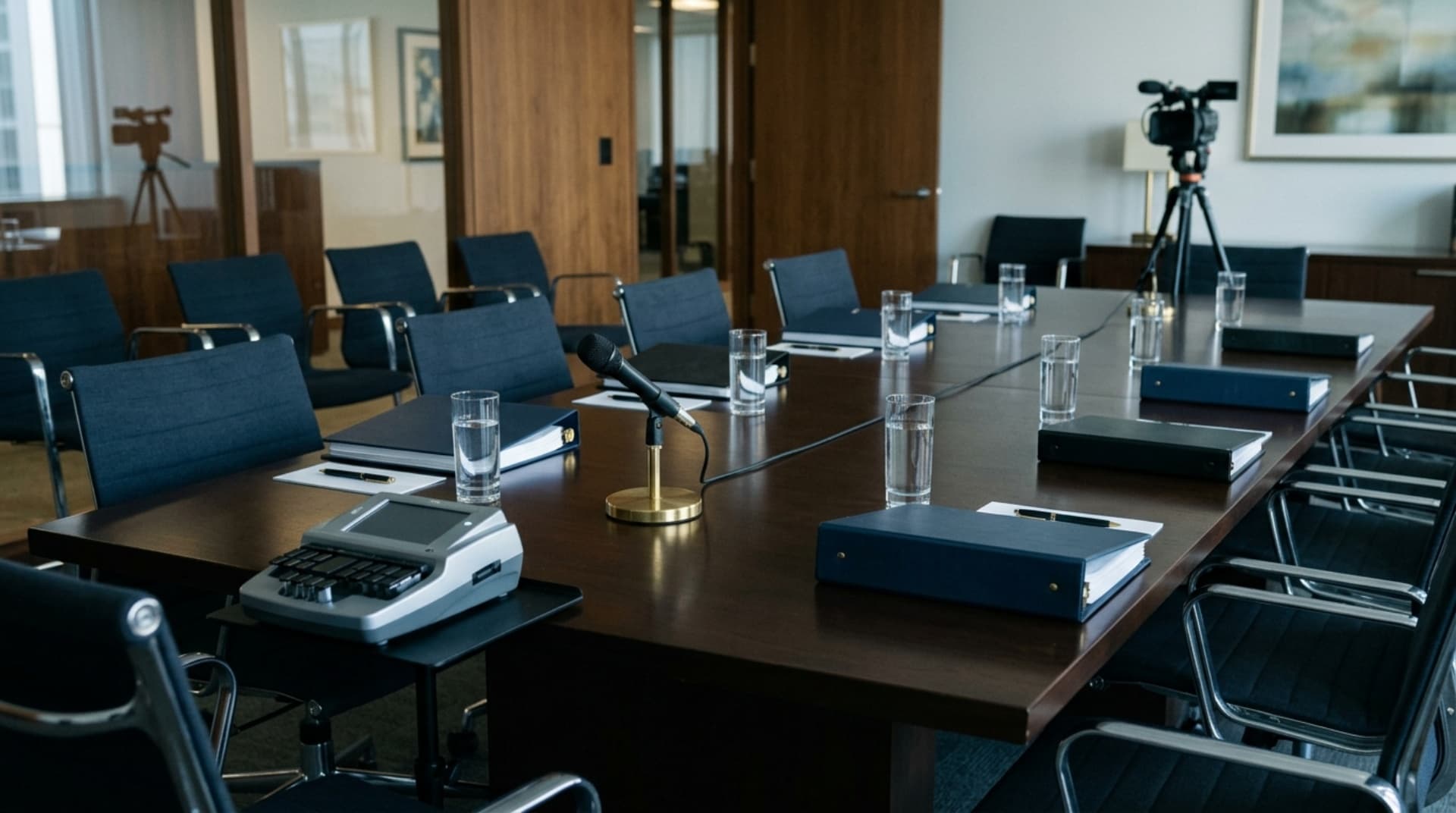
The best expert witness deposition tips come down to three habits: prepare until you know the case better than anyone in the room, answer only what is asked, and stay calm no matter how the questions are framed. A deposition is not a debate you must win. It is a chance to teach the truth clearly and fairly, and that is what makes a physician credible.
Key takeaways
- A deposition is sworn testimony given out of court, and it is usually transcribed and often video-recorded. Your tone and body language can be shown to a jury later.
- Your role in a deposition and at trial is to educate, not to advocate. Do not take anything personally; opposing counsel is trying to win their case.
- Preparation means mastery of the facts, not memorization. Re-read your report, the key records, and any prior transcript, then rehearse with a mock questioning session.
- Pause before you answer, ask for clarification, and say plainly when you do not know something or when a question is outside your scope.
- Most cross-examination tactics repeat. If you recognize the pattern, you can answer with a calm, accurate response instead of a defensive one.
- Juries are swayed less by charisma than by clarity and integrity.
What is the difference between a deposition and trial testimony?
A deposition is a sworn statement made outside court. Attorneys for both sides are present, and a court reporter records every word. Its purpose is to uncover facts, clarify your opinions, and test your credibility before trial.
Trial testimony takes place in court before a judge and jury. It has two parts: direct examination by the attorney who retained you, and cross-examination by opposing counsel.
In Inside the Expert Witness World, Michael Kalivar points out that both settings are effectively interrogations. Your own attorney asks questions that bring out your reasoning. Then the other side cross-examines, often aggressively. In both settings your job is the same: educate the fact finder about the medicine. The most important principle is the simplest one. Do not take anything personally.
How should I prepare for an expert witness deposition?
Preparation is mastery of the facts, not memorization of lines.
- Review your report and verify every statement in it against the records.
- Review any prior deposition transcript you have given, so your positions stay consistent.
- Re-read the key records and be ready to find a page or entry quickly.
- Rehearse concise answers to the questions you expect.
- Arrange a mock deposition with a colleague, an attorney, or a mentor.
- Prepare plain-language explanations and simple analogies for the core medical issues.
- Decide in advance what is within your expertise and what is not. Being ready to acknowledge the limits of your expertise enhances your credibility.
If you are still refining your report, see how to write a medical expert witness report. The report is the foundation for most questions.
Deposition prep checklist
- I have reviewed all relevant records.
- I have re-read and verified my report.
- I have practiced answers to anticipated questions.
- I have arranged a mock deposition.
- I have prepared plain-language explanations.
- I have identified the scope and limitations of my opinions.
- I have planned how to handle trick questions.
- I have reviewed the guidelines on impartiality.
- I have confirmed logistics: time, location, and documents.
How do I behave during the deposition itself?
The transcript and video can be replayed in front of a jury, so treat every minute as if it could be shown in court.
- Listen to the whole question before answering.
- Pause before you answer. A short pause gives you time to think and gives your attorney time to object.
- Ask for clarification. If a question is vague or compound, say so and ask for it to be restated.
- Do not speculate. If you do not know, or the question is outside your scope, say that plainly.
- Stay composed. When questions turn aggressive, reframe the question in neutral terms and answer it. Do not argue.
If you bring notes, remember that anything you bring may become evidence. Keep notes factual, with no personal reflections.
How should I testify at trial?
At trial, direct examination lets you present your findings as a narrative. Cross-examination tests the consistency, logic, and impartiality of what you said.
Four principles carry over from the deposition:
- Clarity. Avoid jargon. If a medical term is necessary, define it in one sentence.
- Education over persuasion. Use analogies and simple examples. You are teaching, not selling.
- Neutrality. No defensiveness, sarcasm, or visible frustration.
- Anchoring in evidence. Point to the record, accepted standards, and published guidelines.
Attorneys ask the questions, but the jury is your real audience, so answer toward them. Juries are swayed less by charisma than by clarity and integrity.
Which cross-examination tactics should I expect, and how do I answer them?
The table below summarizes common tactics with a short model response. Adapt the wording to your own case, and never say anything that is not true for you.
| Tactic | Typical question | Model response |
|---|---|---|
| Attacking qualifications | "Doctor, you are not a radiologist. Why are you giving opinions on CT findings?" | "I am not a radiologist, and I will not offer an opinion on radiology standards. However, I routinely interpret CT scans in my surgical practice and discuss findings directly with radiologists." |
| Limited involvement | "You never met the patient, correct?" | "That is correct. My role is to analyze the medical records objectively, and physicians have an obligation to document their care thoroughly." |
| Bias and money | "How much are you being paid for your testimony today?" | "I am compensated for my time, not for my opinions. My analysis is the same regardless of who retains me." |
| Prior testimony | "In a 2018 deposition you said the opposite." | "Each case is unique. My prior statement applied to different facts and standards." |
| Twisting your words | "You said the surgeon caused the injury." | Correct it firmly and point to your report, for example where you wrote "may have contributed." |
| Yes or no trap | "Every strangulated hernia must be treated immediately in the OR. Yes or no?" | "Not necessarily. That depends on the clinical context, and I can elaborate if allowed." |
| Repetition and fatigue | The same question, asked again and again. | "My opinion remains as stated in my report." |
| Out of touch | "Your hospital is not like a small community hospital, is it?" | "That is true, but the standards of care are universal. They do not change by ZIP code." |
Money, bias, and prior testimony
Do not be shy about your rate. Juries expect a busy doctor to be paid for time away from patients, so never apologize for being compensated. See medical expert witness fees and engagement agreements.
Keep your positions consistent from case to case. Do not say in one case that a bile duct injury during a cholecystectomy is always negligence, and in another that it is always an accepted risk. The book notes that it is not always negligence. The answer depends on the facts, and you should be able to say which facts matter.
What about the trickier traps?
Some questions are built to make you grant a broad concession. Recognize the shape and decline the premise.
- The authoritative source trap. "Is the New England Journal of Medicine authoritative?" A safe reply: "I do not think any journal is universally authoritative. I evaluate each article individually based on the data and methodology." Never grant blanket endorsements.
- The reasonable disagreement trap. "Two competent physicians might reasonably choose different approaches, correct?" Respond that doctors can and do disagree about management decisions, but those disagreements must occur within the boundaries of the accepted standard of care. Distinguish clinical discretion from negligence.
- The "you do not remember" trap. Say you carefully reviewed all of the records but did not memorize them. Ask the attorney to show you the specific page or entry, and say you will be happy to elaborate.
- The professional witness portrayal. Opposing counsel may suggest you do this for a living. According to the book, most practicing experts spend a minority of their time on expert work, from a few hours a month up to 10 to 20 percent of professional activity. An active clinical practice strengthens your authority.
How do I stay calm when the attorney tries to rattle me?
Some tactics aim only to make you defensive. The book describes three real examples.
First, an attorney opened cross-examination by showing an unrelated negative online review from one of the author's patients. It concerned a breast surgery case, while the matter at hand was appendicitis. He cited HIPAA and irrelevance, but admits it upset his focus.
Second, an attorney asked the same question ten times. The author burst out laughing and was accused of not taking the proceeding seriously. He apologized.
Third, an attorney kept calling him a "so-called expert." After the third time, he asked the attorney to refrain, noting that the court had accepted his qualifications.
The lesson is consistent: never argue. Calm professionalism outlasts provocation. If you lose your composure, breathe, apologize if needed, and return to the facts.
Frequently asked questions
Do I have to answer every question in a deposition?
You must answer truthfully the questions that are asked, unless your attorney instructs you not to. You are not required to speculate or to answer outside your expertise. If you do not know, say so plainly.
What if I make a mistake in my testimony?
Correct it as soon as you notice, on the record. A prompt correction is far more credible than an error left standing.
Go deeper
If you want the full chapter on depositions and testimony, along with the rest of the framework for medical-legal work, read the free first chapter of Inside the Expert Witness World. The preface, introduction, and Chapter 1 are free by email, and the full book is available on Amazon.
If you want a low-effort way to get a feel for medical-legal work, see how Kalivar works for physicians. You review brief, anonymized case summaries in your own specialty, on your own schedule. There are no medical records to review at this stage, and an opinion form takes about 10 to 20 minutes. Experts are paid for the opinions attorneys reward, and you stay anonymous unless you accept an introduction after declaring no conflict of interest.
This article is educational and is not legal advice. Physicians should use their own professional judgment and consult legal counsel as needed.